Drainage in Whitebridge
Blocked Stormwater Whitebridge
A choked stormwater run turns one decent shower into a flooded yard or a damp slab. Plumbers Whitebridge clears pits, downpipe lines and gully runs across Whitebridge, and we locate the blockage before anything gets dug up. The drainage hub holds the full picture; this page is for surface water that has stopped moving.
Signs the Stormwater System Is Choked
Stormwater rarely fails quietly. The warning shows up in the yard first, and each of these points to a different part of the run:
Water ponding in the same spot every rain
Downpipes overflowing at the shoe
Slow drainage that lingers for days
Damp patches near the house after rain
Any one of these is worth a look before the next storm arrives, because a partly blocked run becomes a fully blocked one at the worst possible moment.
Why Stormwater Backs Up on This Ridge
The storms arrive sideways.
The ground does not soak.
The bush feeds the grates.
How We Clear a Blocked Stormwater Run
- 1
Call and tell us
Ring (02) 4063 3438 and tell us what's going on in Whitebridge. We'll ask a few quick questions so the right gear is on the truck the first time.
- 2
Quote before work
You get the price before anything starts. No call-out fee, no hourly surprises: you approve the quote or we shake hands and leave, no charge.
- 3
Clear the run properly
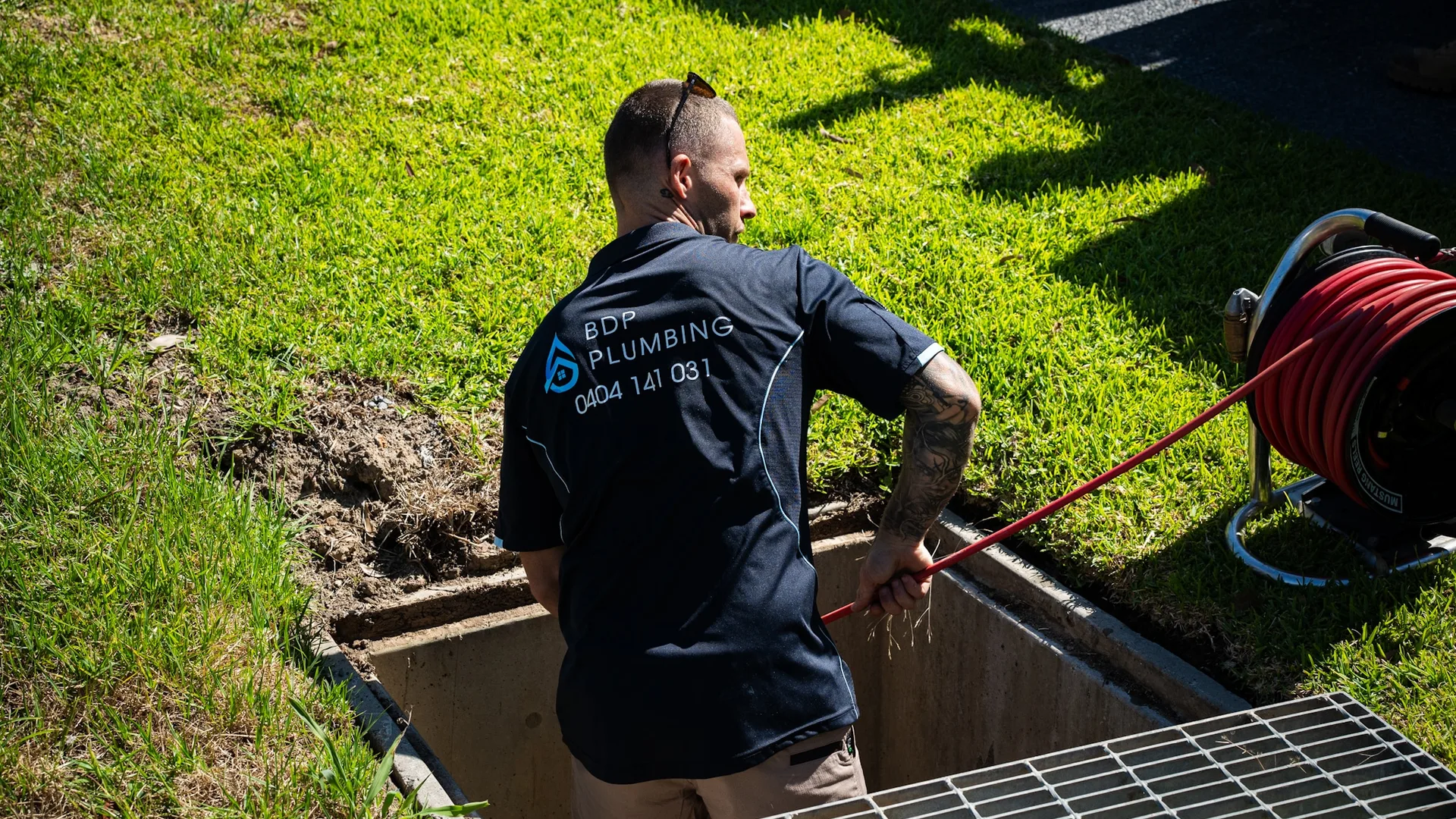
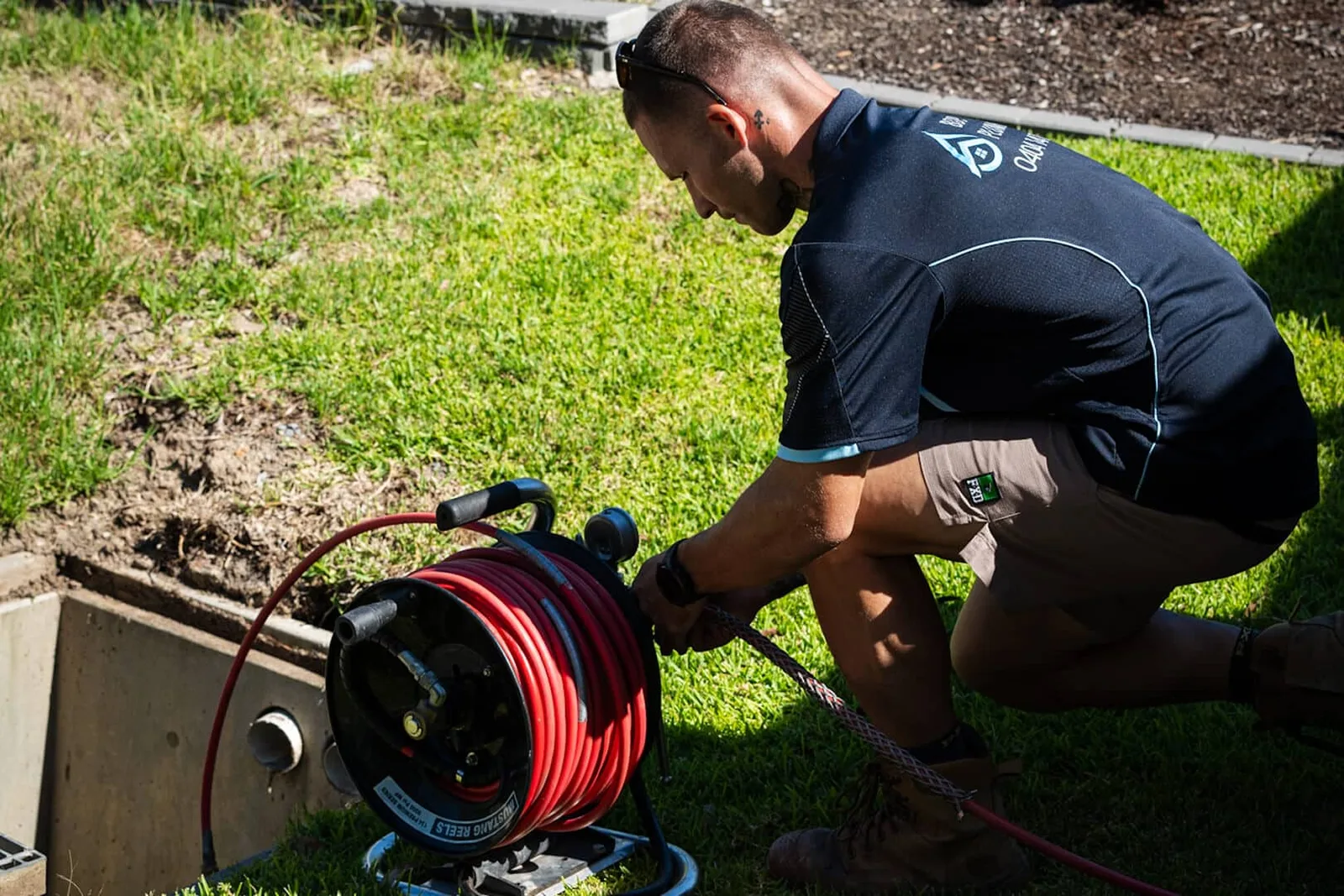
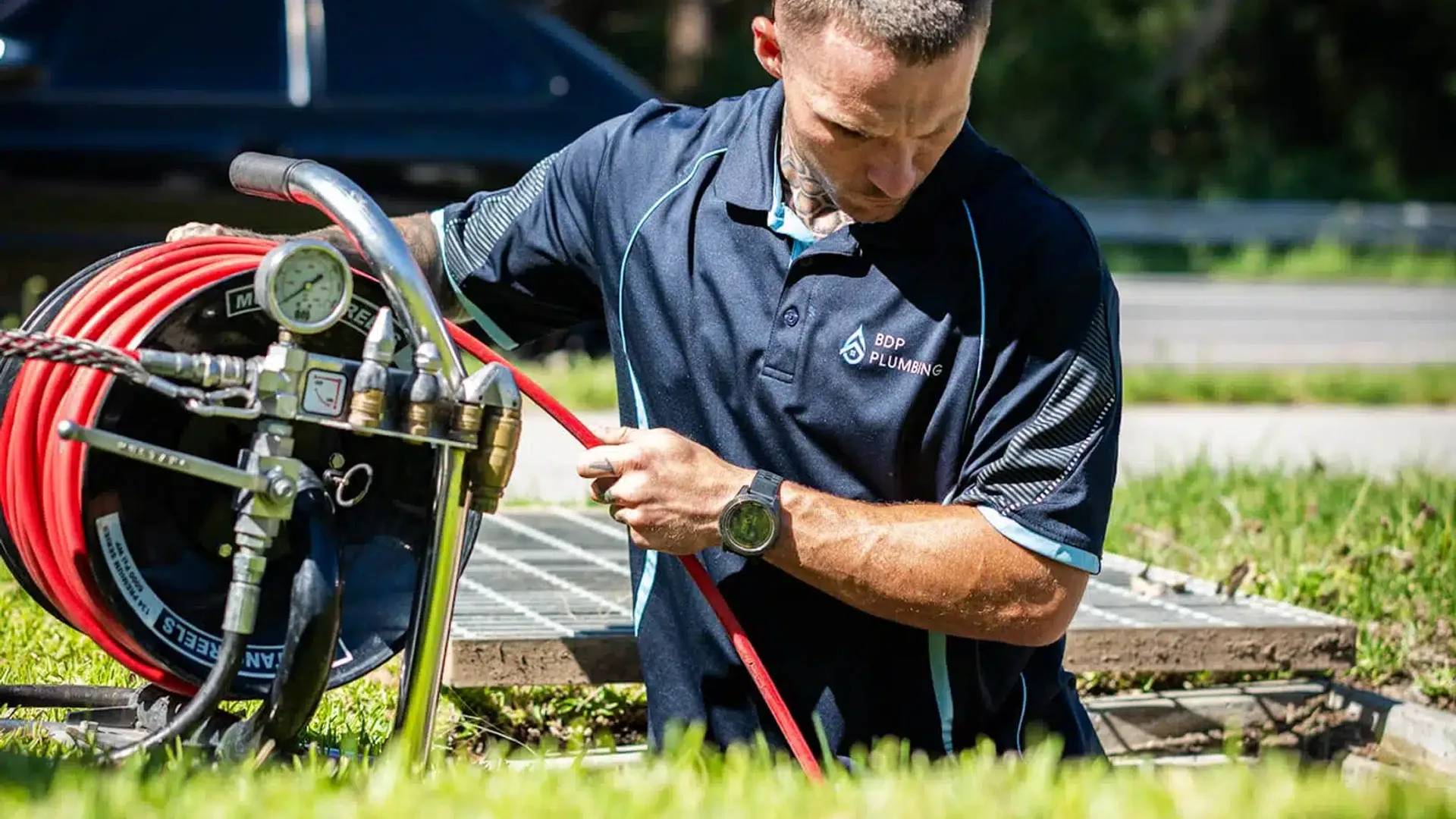
We trace the choke from the pits and access points, jet the line at a pressure the pipe age can handle, and flush the whole run through so the debris has somewhere to go.
- 4
Backed, no questions asked
If something isn't up to standard afterwards, we come back and make it right, no questions asked. That's the standard every Whitebridge job is held to.
Most of these jobs finish from a pit or access point with no digging at all. If the camera shows a section that has collapsed or sheared, that becomes a repair conversation with the footage in front of you before a shovel touches the ground. Our CCTV drain inspections page explains how that works.
Sloping Blocks and Engineered Runs
The McCloy-era subdivision edges on the former Burwood Colliery land sit on blocks that fall away toward the Glenrock gullies. Those runs were engineered to move water fast, and they punish any partial choke. A line built for a steep fall backs up quickly once roots or silt slow it down.
Homes on those slopes often need more than a jet-out:
Discharge points
Ag drains and junctions
A camera pass
Older streets have the opposite problem. Mid-century runs under the 1950s and 1960s weatherboard and fibro streetscapes were sized for the gutters and roofs of their era, and a modern extension or extra downpipe can overload a line that was never meant to carry that catchment. We size the fix to what the pipe actually is, not what the house has become.
Where the Rest of the Drainage Story Lives
Stormwater is one of three drainage problems, and the pages next door cover the others:
And if water is coming in faster than any of this can handle, the emergency plumbing hub is the call that cannot sit in a queue.
Blocked Stormwater Questions
Who is responsible for the stormwater pipes on my property?
Pipes, pits and downpipes inside your boundary are yours to maintain. Hunter Water handles the mains beyond the property line. We clear everything up to that handover point.
Can I clear a blocked stormwater drain myself?
Lifting a pit grate and scooping leaves is fine, and a hose can shift a surface clog. Anything deeper needs proper gear. A coat hanger packs debris tighter or cracks old joints.
Why does my yard flood every time it rains hard?
Water runs fast off a ridge and short storms dump plenty at once. A partly choked pit, gully or discharge line cannot keep up, so water ponds near the house.
Do you need to dig up the yard to fix a stormwater blockage?
Rarely. Most blockages clear from a pit with a jetter. Digging only enters it when a pipe section has collapsed or roots have split a joint, and camera footage shows that first.
How often should stormwater drains be checked?
A look before storm season each year is a good habit, especially for homes backed onto bushland where leaf litter never stops. Older systems deserve a camera check every couple of years.
Do you work in the suburbs around Whitebridge?
Yes. We cover Highfields, Merewether, Dudley, Gateshead and Charlestown on the same terms, with the $0 call out and a written quote before any work begins on every job.
Get the Water Moving Again
Ponding water gets worse every time it rains, and reactive clay ground does not forgive a run that sits choked for months. Call (02) 4063 3438 and tell us what's happening. $0 call out across Whitebridge, a clear quote before any work starts, and a job that gets made right if it isn't right the first time.
Plumbers in Whitebridge and the suburbs around it